
Strategic Deposit Route Mapping Supports Tiered Reward Systems for Live Dealer Progressives on Mobile Platforms
Industry observers track deposit pathways as structured sequences that connect player funding methods with tiered incentive layers in mobile environments, where live dealer tables generate accumulating prize pools through progressive mechanisms. Data from regulatory filings shows these pathways often begin with verified account funding via digital wallets or bank transfers, then proceed through eligibility checks that unlock initial reward tiers before advancing to higher accumulation brackets during live sessions.
Core Elements of Deposit Pathway Structures
Analysts note that portable platforms integrate deposit mapping tools to align funding events with reward eligibility windows, allowing players to navigate sequential steps that trigger bonus credits applicable to live dealer variants such as blackjack or roulette progressives. Figures from state gaming reports indicate mobile deposit volumes rose steadily through 2026, with systems routing transactions through automated verification layers that categorize contributions into base, intermediate, and premium tiers based on cumulative amounts and frequency.
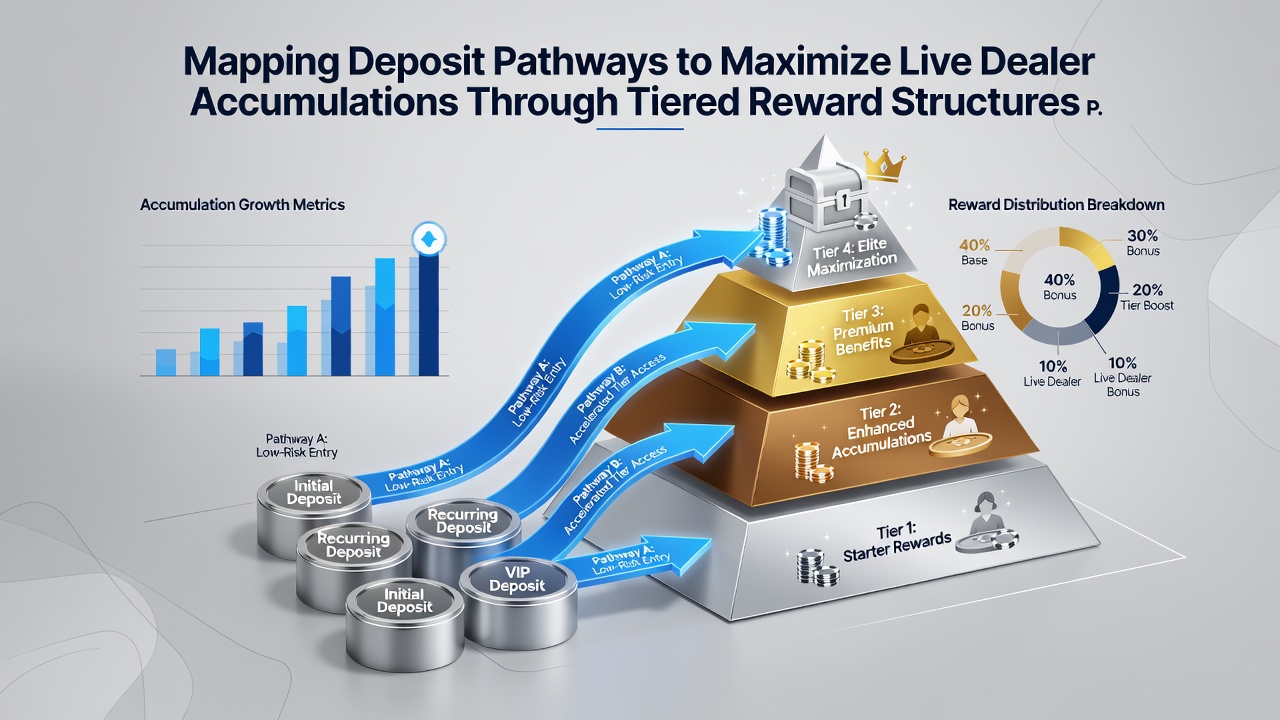
Those who examine platform architectures find that tiered structures commonly feature deposit thresholds triggering escalating multipliers, where an initial mobile deposit might activate a starter accumulation rate while subsequent verified transfers elevate the multiplier applied to live dealer contributions. This layering connects directly to progressive jackpot meters, as each tier adjustment recalibrates the percentage of wagers allocated to the shared pool.
Integration of Tiered Rewards With Live Dealer Features
Research from gaming technology providers demonstrates how mobile interfaces embed deposit pathway visuals that guide users toward optimal sequences for maximizing live dealer accumulations, including real-time tier status updates displayed alongside game streams. In November 2026, several platforms updated their routing algorithms to synchronize deposit confirmations with live table resets, ensuring new reward tiers activate before peak evening play periods when progressive drops occur most frequently.
Platform data reveals that players completing mapped deposit sequences at higher tiers receive enhanced allocation rates to live dealer progressive funds, while lower tiers maintain standard contribution levels without additional multipliers. Observers highlight that these systems rely on timestamped transaction logs to prevent overlap between reward windows, maintaining compliance with jurisdictional accumulation rules across multiple states.
Technical Mapping Tools and Platform Implementation
Developers incorporate pathway mapping software that visualizes deposit routes as interactive flowcharts within mobile applications, linking each funding step to specific reward tier advancements applicable to live dealer sessions. According to Nevada Gaming Control Board reports, mobile progressive systems processed record accumulation volumes in late 2026, with tiered structures accounting for a measurable share of total contributions tracked through automated deposit routing.
Engineers design these tools to handle variables such as deposit method type, timing intervals, and account verification status, routing successful transactions into tier databases that update live dealer wager multipliers in real time. Case examples from platform audits show sequences where repeated mobile deposits within defined windows advance users from entry-level accumulation rates to premium brackets that apply directly to shared jackpot pools.
Regulatory and Data Considerations in Mobile Reward Mapping
Regulatory bodies across jurisdictions require transparent documentation of deposit pathways to ensure tiered rewards align with approved progressive rules, with mobile platforms submitting pathway diagrams during licensing reviews. A study published by the Australian Gambling Research Centre examined similar tiered systems and found that structured deposit routing correlated with consistent accumulation patterns in live dealer environments, though outcomes varied by platform implementation.
Platform operators maintain logs that map each deposit event to subsequent tier activations, enabling audits that verify proper allocation to live dealer progressives without deviation from established parameters. In November 2026, updates to reporting standards emphasized clearer visualization of these pathways for both regulators and platform users navigating mobile interfaces.
Conclusion
Deposit pathway mapping continues to serve as a foundational component in tiered reward frameworks that support live dealer accumulations across portable platforms, with systems evolving to meet both operational and regulatory demands through 2026. Industry data indicates ongoing refinement of these routing mechanisms to maintain alignment between funding sequences and progressive prize distributions in mobile gaming settings.